Showing posts with label activist. Show all posts

Saturday, May 16, 2009

Patent for a Pig

The American biotechnology firm, Monsanto, has applied for a patent for pig breeding in 160 countries. The patent is for specific parts of the genetic material of pigs which Monsanto's genetic researchers have decoded. If this patent is granted, pig breeding would be possible with the approval of the company.


Farmers and breeders are naturally alarmed because these genes have long existed in the great majority of their pigs. Using DNA tests they can prove that there is no new invention in the patent applications but that, instead, granting this patent would be to allow a part of nature to fall into the hands of a single company.


Monsanto's influence on the patent offices is huge. If the patent is approved, money will have to be paid to Monsanto for every pig in the world carrying this genetic marker. This has long been the case for certain feedstuffs, such as genetically modified maize. Many farmers in the US have already become dependent on the company. It is not merely a question of money, however, but also a question of the risk posed to consumers. In America, as in Europe, cases of infertility in animals fed with genetically modified maize are becoming increasingly common. No-one yet knows what effects such products are having on humans.

Sunday, April 12, 2009

Looking for the Revolution

THIS DOCUMENTARY IS IN JAPANESE ONLY...ENGLISH LINK WILL BE POSTED SOON!

Che Guevara died in Southern Bolivia while trying to ignite the sparks of revolution throughout South America. His death at the hands of Bolivian Rangers trained and financed by the US Government, marked the beginning of the cocaine era in Bolivia. Forty years later and under pressure from the masses who gave him a clear mandate, the first indigenous President Evo Morales (an ex-coca leaf farmer) is promising to continue the revolution.


He has nationalised the oil industry and passed laws on Agrarian reform. Despite the revolutionary-sounding election speeches and campaign iconography that accompanied his landslide victory, on closer inspection it emerges that the old system is pretty much alive inside the new one. Corruption, nepotism and old-fashioned populism are at the core of this movement.


The more Morales does to create employment, the more the landowners conspire against him and paralyse Bolivia’s economy. As a result, no jobs are created and the pressure from the poor increases. The cycle of tension threatens to crush both the country and the indigenous revolution. Looking for the Revolution is about the dynamics of that tension as witnessed by the characters of the film - the struggle for power between landowners and the indigenous movement, and the continuation of a revolution Morales-style, started so long ago.

Wednesday, February 25, 2009

Anarchism In America

A colorful and provocative survey of anarchism in America, the film attempts to dispel popular misconceptions and trace the historical development of the movement. The film explores the movement both as a native American philosophy stemming from 19th century American traditions of individualism, and as a foreign ideology brought to America by immigrants.


This documentary features rare archival footage and interviews with significant personalities in anarchist history including Murray Boochkin and Karl Hess, and also live performance footage of the Dead Kennedys.

Wikipedia notes that...

"Anarchists are those who advocate the absence of the state, arguing that common sense would allow people to come together in agreement to form a functional society allowing for the participants to freely develop their own sense of morality, ethics or principled behaviour. The rise of anarchism as a philosophical movement occurred in the mid 19th century, with its idea of freedom as being based upon political and economic self-rule. This occurred alongside the rise of the nation-state and large-scale industrial capitalism, and the corruption that came with their successes.


Although anarchists share a rejection of the state, they differ about economic arrangements and possible rules that would prevail in a stateless society, ranging from complete common ownership and distribution according to need, to supporters of private property and free market competition.


For example, most forms of anarchism, such as that of anarcho-collectivism, anarcho-communism or anarcho-syndicalism not only seek rejection of the state, but also other systems which they perceive as authoritarian, which includes capitalism, markets, and private property. In opposition, a political philosophy known as free-market anarchism or anarcho-capitalism argues that a society without a state is a free market capitalist system that is voluntarist in nature.


The word "anarchy" is often used by non-anarchists as a pejorative term, intended to connote a lack of control and a negatively chaotic environment. However, anarchists still argue that anarchy does not imply nihilism, anomie, or the total absence of rules, but rather an anti-authoritarian society that is based on the spontaneous order of free individuals in autonomous communities, operating on principles of mutual aid, voluntary association, and direct action."


Get the DVD today...


Thursday, January 15, 2009

The World According to Monsanto

Monsanto is a world leader in industrial agriculture, providing the seeds for 90 percent of the world's genetically modified crops. Once a chemical company based in the US, Monsanto has transformed into an international life sciences company, aiming to solve world hunger and protect the environment.


Filmmaker Marie-Monique Robin, however, exposes the company's troubling past, in her recent film, The World According to Monsanto. In an interview with The Real News Network, she discusses Monsanto's controversial practices from a producer of PCBs and Agent Orange to genetically modified seeds and related herbicides.


Starting from the Internet over a period of three years Robin has collected material for her documentary, going on to numerous interviews with people of very different backgrounds. She traveled widely, from Latin America, to Asia, through Europe and the United States, to personally interview farmers and people in influential positions.


As an example of pro-Monsanto interviews, she talked at length with Michael Taylor who has worked as a lawyer for Monsanto and also for the Federal Drug Administration (FDA), where he had great influence on the legalization of the genetically modified bovine growth hormone (BGH). It also became FDA policy during Taylor's tenure that GM seeds are declared to be "substantially equivalent to non-GM seeds, hence proclaiming proof of the harmlessness of GMs to be unnecessary. Michael Taylor is a typical example of technocrats employed via 'the revolving door policy'. He is now head of the Washington, D.C. office of Monsanto Corporation.


More documentaries like this...

A World Without Water

The Curse of Oil

Crude - The Incredible Journey of Oil

Koyaanisqatsi: Life out of Balance

Mark Thomas on Coca Cola


Get this documentary on DVD...

Saturday, December 13, 2008

Zeitgeist 2 (AKA Zeitgeist Addendum)

Zeitgeist: Addendum, a 2008 documentary film produced by Peter Joseph, is a continuation of the film Zeitgeist, the Movie. The film discusses the Federal Reserve System in the United States, the CIA, corporate America, other government and financial institutions, and even religion, concluding that they are all corrupt institutions detrimental to humanity and are in need of replacement.


The film advocates "The Venus Project" as a possible solution. According to director Peter Joseph, the film "attempts to locate the root causes of this pervasive social corruption, while offering a solution". In its conclusion, Addendum stresses the need for belief systems to embrace the ideas of emergence and interdependence. He outlines concrete steps that can be taken to weaken the monetary system. The film suggests actions for "social transformation", which include boycotts of the large banks that make up the Federal Reserve System, the mainstream media, the military, and energy companies. It is also suggested that people reject the political structure.


Part I criticizes the practice of Fractional-reserve banking and criticizes the creation of money through loans. The film's argument goes as following: Dollar bills get printed, or the money supply is increased, when the Fed buys Treasury Bonds. This money ends up in commercial banks.


Then, once that money becomes a reserve in banks, it becomes "multiplied" through the Fractional-reserve system, and then loaned to customers. The film claims that such a system is "absurd" because the Interest that must be paid for the money that was loaned does not exist; it was never created. The film compares this system to a game of musical chairs, in which a person will always be left out. This subject is also touched in the first Zeitgeist film.

Part II is a documentary style interview with John Perkins, in which he describes his role as a self-described economic hitman. He claims he helped CIA and the ruling political/corporate elites who have worked to undermine legitimate foreign regimes that put the interests of their populations before those of transnational corporations.


Part III describes The Venus Project, a proposal created by Jacque Fresco. The film promotes the Venus Project as a sustainable solution for mankind on Earth. Its main goal is to produce a "resource-based economy" using modern technology.


Part IV states that everything wrong with the world is "fundamentally the result of a collective ignorance of two of the most basic insights humans can have about reality -- the 'emergent' and 'symbiotic' aspects of natural law." The film then suggests actions for "social transformation," such as boycotts of large banks, the mainstream media, the military and energy companies; rejecting the political structure; and "creating critical mass."


More documentaries like this...

Zeitgeist

The Secret History of the Credit Card

Money as Debt Documentary

Own this important documentary on DVD...

Monday, December 8, 2008

Super Size Me

Super Size Me is an excellent documentary written, produced, directed by and starring Morgan Spurlock. Spurlock's film follows a 30-day time period (February 2003) during which he subsists exclusively on food and items only purchased from McDonald's.


The film documents this lifestyle's drastic effects on Spurlock's physical and psychological well-being, and explores the fast food industry's corporate influence, including how it encourages poor nutrition for its own profit.


During the filming, Spurlock dined at McDonald's restaurants three times per day, sampling every item on the chain's menu at least once. He also super sized his meal every time he was asked. Spurlock consumed an average of 20.92 megajoules or 5,000 kcal (the equivalent of 9.26 Big Macs) per day during the experiment. As a result, the then-32-year-old Spurlock gained 24.5 lbs. (11.1 kg), a 13% body mass increase, and experienced mood swings, sexual dysfunction, and liver damage. It took Spurlock fourteen months to lose the weight he gained.


The stated driving factor for Spurlock's investigation was the increasing spread of obesity throughout U.S. society, which the Surgeon General has declared "epidemic," and the corresponding lawsuit brought against McDonald's on behalf of two overweight girls, who, it was alleged, became obese as a result of eating McDonald's food.


Spurlock points out that although the lawsuit against McDonald's failed (and subsequently many state legislatures have legislated against product liability actions against producers and distributors of "fast food"), much of the same criticism leveled against the tobacco companies applies to fast food franchises (except that these companies never lied about their product), although it could be argued that fast food, though physiologically addictive, is not as addictive as nicotine.

Buy this classic documentary on DVD today...

Wednesday, October 8, 2008

The Weather Underground

"Hello, I'm going to read a declaration of a state of war...within the next 14 days we will attack a symbol or institution of American injustice." ~ Bernardine Dohrn

In October 1969 hundreds of young people, clad in football helmets and wielding lead pipes, marched through an upscale Chicago shopping district, pummeling parked cars and smashing shop windows in their path. This was the first demonstration of the Weather Underground's "Days of Rage." Outraged by the Vietnam War and racism in America, the organization waged a low-level war against the U.S. government through much of the 1970s, bombing the Capitol building, breaking Timothy Leary out of prison, and evading one of the largest FBI manhunts in history.


The Weather Underground is a feature-length documentary that explores the rise and fall of this radical movement, as former members speak candidly about the idealistic passion that drove them to "bring the war home" and the trajectory that placed them on the FBI's most wanted list.


Thirty years ago, with those words, a group of young American radicals announced their intention to overthrow the U.S. government. In THE WEATHER UNDERGROUND, former Underground members, including Bernardine Dohrn, Bill Ayers, Mark Rudd, David Gilbert and Brian Flanagan, speak publicly about the idealistic passion that drove them to "bring the war home" and the trajectory that placed them on the FBI's most wanted list.


Fueled by outrage over racism and the Vietnam War, the Weather Underground waged a low-level war against the U.S. government through much of the 1970s--bombing targets across the country that they considered emblematic of the real violence that the U.S. was wreaking throughout the world. Ultimately, the group's carefully organized clandestine network managed to successfully evade one of the largest manhunts in FBI history, yet the group's members would reemerge to life in a country that was dramatically different than the one they had hoped their efforts would inspire.


Extensive archival material, including, photographs, film footage and FBI documents are interwoven with modern-day interviews to trace the group's path, from its pitched battles with police on Chicago's streets, to its bombing of the U.S. Capitol, to its successful endeavor breaking acid-guru Timothy Leary out of prison. The film explores the Weathermen in the context of other social movements of the time and features interviews with former members of the Students for a Democratic Society (SDS) and the Black Panthers. It also examines the U.S. government's suppression of dissent in the 1960s and 1970s.


Looking back at their years underground, the former members paint a compelling portrait of troubled times, revolutionary times, and the forces that drove their resistance.

Own this documentary on DVD...


Saturday, July 19, 2008

Money as Debt Documentary

This documentary shows that it would seem natural that money is created by the State, and in fact most Central Banks seem to be owned by the State and run by it. I say "seem" because, to all intents and purposes, it is an apparency. They are almost constituting a "fourth power" in addition to the three legally constituted and well known "traditional" powers, legislative, executive and judicial.


When the State needs money, it does not order the Central Bank to credit some money to the treasury’s account. The State has only two ways to obtain money.

One is taxation of it's citizens, the other is borrowing from the banks. When the Central Bank issues money, this is done in the form of a loan. The State has to borrow this money, and must promise to repay it, with interest.

The same is true of course for a private person who needs money borrowing from a commercial bank. The bank is happy to loan, as long as you can show you have security, and promise to repay with interest.
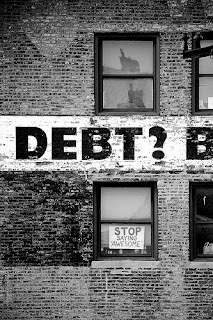


How can the banks "create" money? That is a good question. Is it not the State's printing office that prints all the banknotes?

Banknotes, when they are printed, are considered the property of the Central Bank. They are not given to the State to spend, but are brought into circulation against a corresponding debt. Anyone wanting some of those notes to spend, has to "buy" them by giving up some of their credit. And in any case, most of the money in circulation (more than 90%) is not banknotes but "credit".


When you go to your bank asking for money, the loan you get is created right there in your bank. The "money" consists of figures on your bank account, and it can be spent writing checks, giving an order to transfer or drawing the cash. Banks only have to have a small percentage of their loaned-out money actually available. The rest can be paid out just by moving some figures from one account to another. The important thing to know: Money is created just by inserting some numbers into a computer.


In practice, it works like this: For every 10.000 a bank gives out as loans, 1000 or 2000 have to be deposited at the central bank. That means, if a bank collects 100.000 in deposits, it could keep 10.000 for liquid cash, put 90.000 into deposit with the central bank, and it is then allowed to create 900.000 of fresh money just by writing the figures on someone’s accounts!

In the case of the government needing money to spend, the procedure is slightly different, but the result is the same. The government has to issue papers that promise interest and repayment. Those papers are "bought" by the banks, who "sell" them to their wealthy clients, or who may also keep them, and the government gets credited an equivalent sum of money.


The irony here is that the government, who should by rights be the issuing authority of the money that circulates in the country, has to borrow the money from privates (through the bank) and that is has to pay interest for this.

Now we start to see why the government never has money, and why much of our taxes go "off the top" of the budget, towards debt service.

Thursday, July 17, 2008

Mark Thomas on Coca Cola

In this documentary, political activist and journalist Mark Thomas travels to South America, India and the US to investigate the way in which Coca-Cola and its suppliers operate and the extent to which they upholds moral and ethical obligations.


Coca-Cola is one of the most iconic brands of both the 20th and 21st centuries. Promoting itself as the drink of freedom, choice and US patriotism, the company's feel-good factor is recognised worldwide and reflected in its enormous profits.


But behind this carefully crafted image exists a company accused of environmental damage, human rights violations and questionable business practices.


Political activist and journalist Mark Thomas travels to South America, India and the US to investigate the way in which Coca-Cola and its suppliers operate and the extent to which they upholds moral and ethical obligations.


Thomas, a long-term critic of Coca-Cola's more controversial practices, finds disturbing evidence which undermines its effervescent image as a force for good and which has prompted a global consumer backlash.

Coke's response to Dispatches' documentary

For more information...

Coca-Cola: drinking the world dry

Monday, July 14, 2008

Zeitgeist

Zeitgeist is a documentary that was first released on June 26, 2007 and topped the Google video charts most viewed videos. The film was translated into several languages and is distributed officially via Google Video and BitTorrent. Zeitgeist won the top award of Best Feature Documentary/Artivist Spirit at the 4th Annual Artivists Awards in 2008 in Hollywood, CA. An upcoming sequel has been announced.


The film starts with a speech by Chögyam Trungpa about spirituality, followed by a series of musically synchronized clips of war and explosions culminating with one of the towers of World Trade Center collapsing during 9/11. Then there follows a sequence of clips showing the horrors of war.


There is a short clip that shows a hand writing "1 + 1 = 2", but is brushed away by another hand before the first finishes, and is replaced by a bible and an American flag. After a few more war clips, the film then quotes Jordan Maxwell's Inner World of the Occult, criticizing religious institutions, governments, and the banking cartels who "have misled [the people] away from the true and divine presence in the universe." This portion ends with more images accompanied by audio of a portion of a George Carlin monologue on religion.

Buy this film on DVD now...

Tuesday, June 17, 2008

Steal This Film 2 Documentary

These are strange times indeed. While they continue to command so much attention in the mainstream media, the 'battles' between old and new modes of distribution, between the pirate and the institution of copyright, seem to many of us already lost and won. We know who the victors are. Why then say any more?


This documentary highlights the fact that because waves of repression continue to come: lawsuits are still levied against innocent people; arrests are still made on flimsy pretexts, in order to terrify and confuse; harsh laws are still enacted against filesharing, taking their place in the gradual erosion of our privacy and the bolstering of the surveillance state. All of this is intended to destroy or delay inexorable changes in what it means to create and exchange our creations. If STEAL THIS FILM II proves at all useful in bringing new people into the leagues of those now prepared to think 'after intellectual property', think creatively about the future of distribution, production and creativity, we have achieved our main goal.


It has been an exciting and demanding year for us and we really hope you'll enjoy the work we've done. It would not have been possible without the thousands of donations you have given us. We have a plan for the future and if you would like to continue to support us, go here. Thank you.

Wanna watch this film in high-quality and support the producers, buy the DVD...